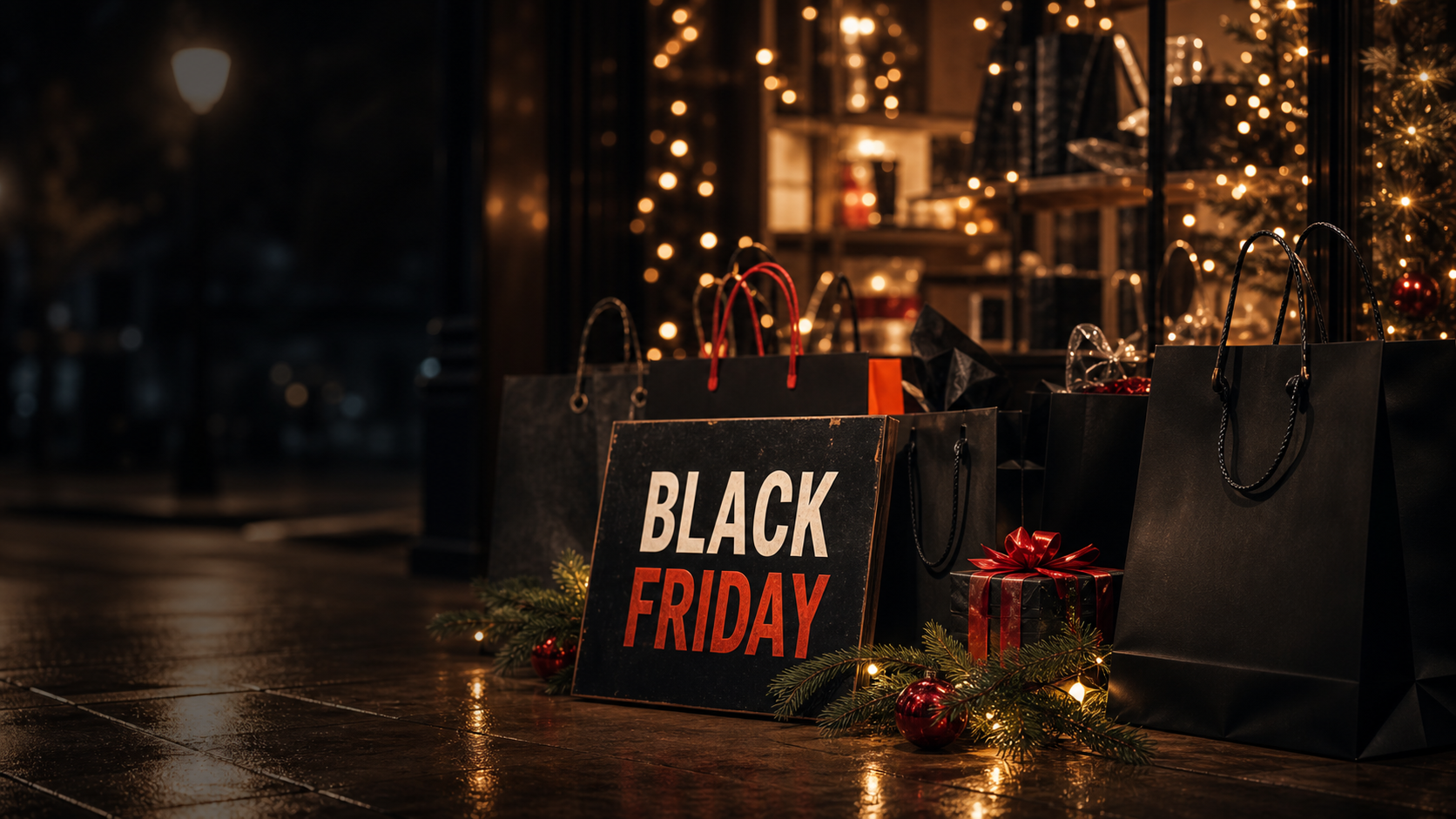
Black Friday symbols are built from retail behavior: a sale sign, a countdown clock, a shopping cart, a doorbuster and the black-red color contrast of a limited-time offer.
Unlike a religious holiday, Black Friday has no inherited sacred iconography. Its symbols developed through advertising, store design, crowd stories and the shift from physical queues to online shopping.
Why Black Friday has symbols at all
A shopping promotion needs to communicate urgency quickly. Large numbers, red labels, flashing countdowns and “limited quantity” messages tell a shopper that waiting may mean losing the deal. The visual system turns an ordinary retail day into a recognizable event.
Those symbols also create a story about participation. A line outside a store, a full shopping cart or a sold-out sign makes the event look collective, even when people shop alone on phones. The symbol is persuasive because it joins price information with drama.
The black-and-red sale palette
Black gives the day its name, but the retail name did not begin as a color code. The shopping use of “Black Friday” is commonly traced to Philadelphia in the mid-twentieth century, where police used the phrase for traffic and crowd problems. Retailers later promoted a more positive explanation about moving “into the black,” meaning profitability.
Red remains common in sale signs because it is visually strong and easy to notice. Black backgrounds, white numbers and bright red discounts create contrast on storefronts, websites and emails. The palette is a modern marketing convention, not an ancient Black Friday tradition.
Doorbusters, doors and the crowd
A doorbuster is a deeply discounted item meant to bring shoppers through a store door. The word creates a physical image of a deal powerful enough to “bust” the entrance, even though the actual offer is usually a limited stock promotion. Doors, queues, shopping carts and numbered tickets became familiar symbols of early-morning Black Friday.
These images also carry a social cost. Crowds, overnight lines and rushed opening hours can place pressure on workers and shoppers. Current retailers often spread deals across a week or offer online access, which reduces the centrality of the door while preserving the idea of urgency.
Shopping bags, carts and the proof of the bargain
A full shopping bag symbolizes successful acquisition; a cart symbolizes the modern path from product discovery to checkout. In older advertising, bags and crowded malls made consumption visible. In e-commerce, the cart icon and “checkout” button perform the same role without a public crowd.
The cart can also represent planning. People compare prices, save items, use wish lists and wait for a discount. That behavior is different from the impulsive doorbuster image, and it explains why Black Friday symbols now appear in apps, email subject lines and browser banners as well as stores.
Countdown clocks and limited-time language
Timers, “ends tonight” banners and hourly deals give Black Friday a deadline. They turn a long shopping season into a sequence of small decisions. The symbol is effective because it suggests that the price is temporary, even when a similar promotion may reappear later.
Online stores use stock counters, flash-sale badges and delivery cutoffs to replace the physical line. These tools should be read carefully: a countdown may show a campaign end rather than the last possible opportunity to buy a product anywhere. The symbol communicates urgency, not proof of the best price.
Store windows, electronics and gift imagery
Televisions, game consoles, laptops, toys and appliances became common Black Friday imagery because large-ticket goods made a discount easy to dramatize. Store windows and newspaper inserts displayed the product beside a huge price, while modern pages use product cards and comparison tables.
The product changes as technology changes. Black Friday no longer belongs only to electronics; clothing, beauty, travel, groceries and services can all use the event. A symbol page should explain the sales language rather than suggest that one product category defines the day.
Cyber Monday and the extended event
Cyber Monday expanded the retail weekend into an online counterpart. Today, Black Friday may begin before Thanksgiving and continue through Cyber Monday or an entire “Black Friday week.” The calendar symbol has changed from one Friday morning to a rolling period of early access, email alerts and price drops.
This evolution matters because the old midnight-store image is no longer a complete description. The National Museum of American History documents the shift from decorated department-store windows and crowds toward pallets, big-box retail and persistent markdowns. Online shopping further changed the event by moving the symbol from the street to the screen.
Reading Black Friday symbols critically
A red sign does not automatically mean the lowest annual price, and a timer does not prove scarcity. Check the product history, return policy, shipping cost and whether the sale is available elsewhere. The symbols are useful for navigation, but they are designed to influence attention.
For the event’s history, visit the history of Black Friday. For shopping behavior, read Black Friday traditions; for practical food around the day, see Black Friday food; and compare it with Thanksgiving symbols.
Sources and further reading
History traces the competing explanations for the name and its retail development. The National Museum of American History records how store design and retail experience changed. Associated Press documents the move from doorbuster crowds toward online and extended sales.