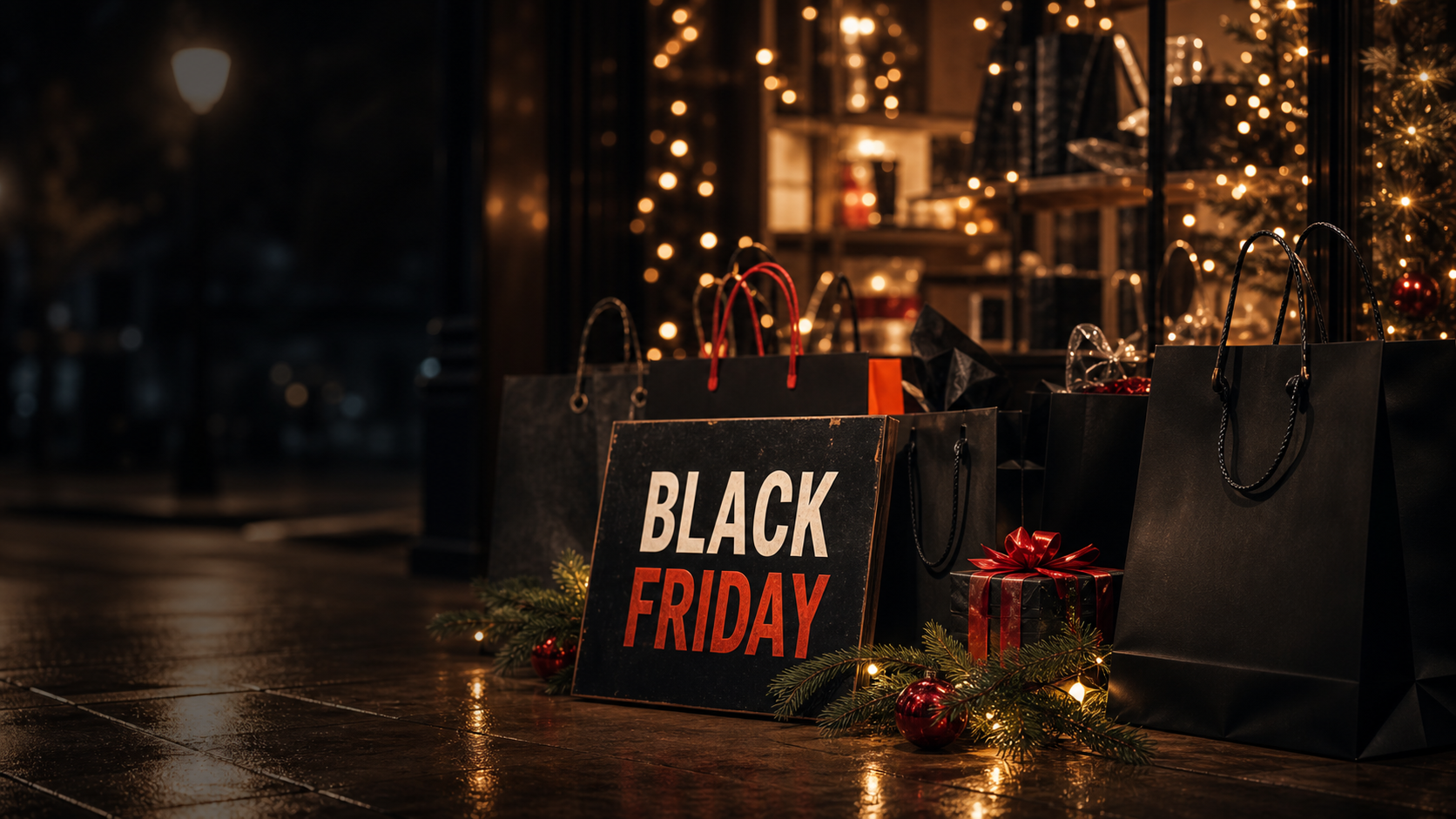
Black Friday has no traditional feast of its own. Its food culture grows out of Thanksgiving leftovers, long shopping hours, mall snacks and the practical need to feed people during a retail event.
That makes Black Friday Food a separate search intent from Thanksgiving Food: the question is what to eat while shopping, working or staying home the day after the feast.
Why Black Friday food is different from Thanksgiving food
Thanksgiving centers on a planned meal; Black Friday centers on movement, work and shopping. People may eat leftovers quickly before leaving home, carry coffee through a store, buy lunch at a food court, or prepare an easy dinner after returning from a long day.
The food is shaped by the schedule. Retail workers may start before dawn, shoppers may be driving between stores, and online buyers may eat at a desk. Portable, reheatable and shareable foods fit better than a formal multi-course meal.
Thanksgiving leftovers become the practical menu
Turkey sandwiches are the familiar Black Friday leftover: sliced turkey can be combined with stuffing, cranberry sauce, gravy or cheese. Other households make turkey soup, pot pie, hash, enchiladas, fried rice or casseroles. Mashed potatoes become patties, and vegetables can be folded into omelets or wraps.
These dishes are not ancient Black Friday traditions. They are a household response to the abundance of Thanksgiving and the shorter time available for cooking the next day. Calling them “Black Friday food” describes a real use pattern without pretending the shopping day created the recipes.
Breakfast before early shopping
Early shoppers and retail staff often want food that is fast but sustaining: oatmeal, yogurt and fruit, eggs, breakfast sandwiches, toast, muffins or leftover pie. Coffee is a major part of the visual culture because stores and drive-through restaurants open early and customers need a warm drink during cold morning lines.
A useful breakfast balances convenience with the length of the day. Packing a sandwich, nuts, fruit or water can be more practical than relying on whatever is available at the mall. Families who shop online can turn breakfast into a calmer shared meal while comparing deals at home.
Mall food courts and shopping-center snacks
Food courts, pretzels, pizza, fries, burgers, sandwiches, cookies and soft drinks became part of the Black Friday experience because shopping centers supply food where crowds already gather. These foods are designed for speed and portability: one hand holds the meal while the other carries bags or a phone.
The food court is also a social pause. Families can split up to shop, meet at a recognizable table and compare purchases. The meal is less about a special recipe than about refueling inside a public commercial space.
Food for workers and people who stay home
Black Friday is a workday for many retail, delivery, restaurant and warehouse employees. Packed lunches, staff-room snacks and meals that can be eaten in short breaks matter as much as shopper treats. A realistic page should include workers rather than describing the day only as a fun family outing.
At home, people may avoid the crowds and cook a second Thanksgiving meal, make pizza, order takeout or use leftovers over the weekend. Online shopping has widened the event beyond physical stores, so “Black Friday food” now includes meals eaten during a home browsing session.
How Black Friday spread beyond the United States
Black Friday began as a U.S. shopping day after Thanksgiving, but retailers in other countries adopted the name and discount format even where Thanksgiving is not a local holiday. That means the food connection can be weaker or different outside the United States. A British shopper may encounter Black Friday promotions without a Thanksgiving leftover tradition at home.
The date and food therefore need context. In the United States, the day follows a major family feast; elsewhere, it may be a retail campaign attached to early Christmas shopping. The same coffee, pizza or online lunch can appear, but the cultural reason is not identical.
Planning a useful Black Friday food spread
For a shopping group, choose foods that can be prepared ahead: turkey sliders, soup in a thermos, breakfast burritos, fruit, cookies and drinks. For a retail team, label allergens, include vegetarian options and provide food that can be eaten during a short break. For home shoppers, leftovers can be repurposed into a new meal rather than reheated unchanged.
Do not claim that a dish guarantees savings or that every shopper eats the same menu. Food is the human infrastructure around Black Friday: it keeps people working, traveling, waiting and sharing time while the retail event changes.
For the shopping-day timeline, read the history of Black Friday. Compare its shopping traditions, symbols and the broader Thanksgiving food that often supplies its leftovers.
Sources and further reading
The USDA Economic Research Service found that Americans spend substantially more time eating, preparing food and cleaning up on Thanksgiving, while non-food shopping rises on Black Friday. History’s Black Friday overview explains how the retail day grew out of the post-Thanksgiving shopping calendar.