United States Holiday
(v) Scroll to discover more insights
How many days until
Memorial Day
Memorial Day is the U.S. remembrance holiday for military personnel who died while serving, observed on the last Monday in May.
More holidays in May
290Days
00Hours
00Minutes
00Seconds
Quick Facts
About Memorial Day
This page distinguishes Memorial Day from Veterans Day. Memorial Day centers on remembrance of the dead, cemetery visits, flags, ceremonies and the long weekend that often marks the unofficial start of summer in the United States. The page identifies United States as the primary context for Memorial Day.
History of Memorial Day
Introduction
Memorial Day is the United States’ principal national occasion for mourning military personnel who died while serving in the armed forces. It is observed on the last Monday in May and is marked by cemetery visits, grave decorations, public ceremonies, flags, music, speeches, and private remembrance. Although the holiday is now also associated with travel, sales, sporting events, and the unofficial beginning of summer, its central purpose is commemoration of the dead rather than general recognition of everyone who has served.
The holiday developed after the Civil War, when communities across the country faced an unprecedented scale of death and burial. Local groups began decorating graves and organizing memorial ceremonies before a national veterans’ organization promoted an annual Decoration Day in 1868. Over time, the observance expanded beyond the Civil War dead, became known as Memorial Day, moved from May 30 to the last Monday in May, and accumulated traditions reflecting changing ideas about war, sacrifice, citizenship, and national memory.
The Civil War and the scale of national mourning
The American Civil War created a crisis of death and remembrance unlike anything the United States had previously experienced. Hundreds of thousands of Union and Confederate soldiers died from combat, disease, wounds, and imprisonment. Many were buried far from home, sometimes in temporary or unidentified graves. Families struggled to obtain reliable information about where relatives had died or been buried.
The war also transformed the federal government’s role in caring for military graves. National cemeteries were created near battlefields, hospitals, prison camps, and military installations. Burial records, reinterment projects, monuments, and organized ceremonies helped turn scattered graves into public landscapes of mourning. These developments provided the institutional setting in which Decoration Day emerged.
Local grave-decorating traditions
Decorating graves with flowers was not invented after the Civil War. Families and religious communities had long visited burial grounds, tended graves, and marked anniversaries of death. What changed after the war was the scale and civic purpose of these activities. Flowers, flags, processions, speeches, and music became ways for entire communities to honor large numbers of military dead.
Several towns and organizations later claimed to have held the first Memorial Day or Decoration Day ceremony. Reported observances took place in locations including Boalsburg, Pennsylvania; Columbus, Mississippi; Columbus, Georgia; Charleston, South Carolina; Carbondale, Illinois; and Waterloo, New York. These claims often rely on different definitions of what counts as the first event: an informal grave visit, an organized community ceremony, an annual observance, or a nationally promoted commemoration.
Black communities and early Civil War remembrance
A significant early commemoration occurred in Charleston, South Carolina, in May 1865. During the war, Confederate authorities had used a former racecourse as a prison camp, where Union soldiers died and were buried. After the city fell, Black residents and workers reburied the dead and created a more dignified cemetery.
Thousands of African Americans, including schoolchildren, members of mutual-aid organizations, ministers, and Union troops, participated in a procession and ceremony at the site. Historians have debated how directly this event should be connected to the later national Memorial Day, but it demonstrates that formerly enslaved people played an important role in shaping public remembrance of Union sacrifice and emancipation immediately after the war.
Women’s associations and the decoration of graves
Women’s memorial associations were central to postwar commemoration. In Southern communities, white women organized cemetery associations to recover, rebury, and decorate Confederate graves. Similar work occurred in Northern communities around Union cemeteries and local monuments. These groups raised money, maintained burial grounds, coordinated ceremonies, and preserved particular interpretations of the war.
Memorial work gave women a public civic role at a time when they lacked equal political rights. It also shaped competing historical memories. Some ceremonies focused on grief and reconciliation, while others reinforced sectional loyalty or promoted accounts of the war that minimized slavery and emancipation. Grave decoration was therefore both an act of mourning and a form of historical interpretation.
General Logan and the 1868 Memorial Day Order
On May 5, 1868, John A. Logan, commander in chief of the Grand Army of the Republic, issued General Orders No. 11. The Grand Army of the Republic was an influential organization of Union veterans. Logan designated May 30, 1868, for decorating the graves of comrades who had died in defence of the country during the Civil War.
The order did not prescribe one mandatory ceremony. Instead, it asked local posts and communities to arrange suitable services and decorate graves with flowers. It also encouraged participants to preserve the memory of those who had died. Because the order came through a nationwide veterans’ organization, it helped coordinate local practices into a broadly recognized annual observance.
The first national Decoration Day at Arlington
A major Decoration Day ceremony was held at Arlington National Cemetery on May 30, 1868. Arlington had been established as a military cemetery during the Civil War on land connected with the family of Confederate general Robert E. Lee. By 1868, thousands of Union dead had been buried there.
Former Union general and future president James A. Garfield delivered an address, and participants decorated graves across the cemetery. Children from military and veterans’ homes were among those who placed flowers. Arlington’s proximity to the national capital and its growing symbolic importance helped make the ceremony a model for later national observances.
Why May 30 was selected
Logan’s order did not provide one definitive explanation for choosing May 30. Later accounts often suggest that the date was selected because flowers would be widely available or because it did not mark the anniversary of a particular Civil War battle. These explanations are plausible, but they should not be treated as completely documented facts unless supported by contemporary evidence.
The fixed date nevertheless became important. For decades, ceremonies took place on May 30 regardless of the day of the week. Schools, veterans’ groups, military posts, cemeteries, churches, and municipal governments organized rituals around the date, helping establish a national rhythm of remembrance.
Decoration Day spreads across the country
By the late nineteenth century, Decoration Day ceremonies were held widely across Northern states and at federal military sites. Veterans marched in uniforms, bands played funeral music, speakers delivered patriotic addresses, and schoolchildren placed flowers or flags on graves. The ceremonies connected private grief with public narratives about Union, sacrifice, and national survival.
Southern observance developed differently. Many former Confederate states and communities maintained separate Confederate memorial days on dates associated with regional events or leaders. Some Southern communities also participated in the May 30 observance, but sectional divisions remained visible. The national holiday did not immediately create one shared interpretation of the Civil War.
Reconciliation and contested Civil War memory
As the generation that had fought the Civil War aged, public ceremonies increasingly emphasized reconciliation between white Union and Confederate veterans. Joint reunions, handshakes across former battle lines, and speeches celebrating courage on both sides became familiar symbols. These gestures helped reduce sectional hostility and strengthened national unity.
However, reconciliation often came at the cost of obscuring the war’s relationship to slavery and the experiences of Black Americans. During the same period, racial segregation, disenfranchisement, and violence expanded across much of the country. Memorial Day history therefore includes both genuine mourning and reunion and the political choices through which some versions of the past were elevated over others.
From Civil War dead to all American war dead
Decoration Day initially centred primarily on those who died in the Civil War. After the United States entered the First World War, the observance broadened to include military personnel who had died in other American conflicts. This change reflected the growth of new veterans’ organizations, overseas military cemeteries, war memorials, and a larger national community of bereaved families.
Later wars added new generations of dead and new forms of remembrance. World War II, the Korean War, the Vietnam War, conflicts in the Persian Gulf, Iraq, Afghanistan, and other military operations shaped ceremonies and monuments. The holiday’s language gradually shifted from a Civil War veterans’ tradition toward national remembrance of all who died while serving.
Decoration Day becomes Memorial Day
The name Memorial Day appeared alongside Decoration Day during the late nineteenth century. Both terms were used for decades, and usage varied by community, newspaper, veterans’ organization, and government. “Memorial Day” gradually became more common as the holiday’s meaning expanded beyond decorating Civil War graves.
The transition was not a single national renaming on one date. Federal and state documents adopted the newer term at different times. By the twentieth century, Memorial Day had become the dominant name, while Decoration Day survived in local speech, historical accounts, songs, and some cemetery traditions.
Federal recognition and prayer for peace
Federal recognition developed gradually. Congress made May 30 a holiday for federal employees in the District of Columbia in the nineteenth century, but national observance still depended heavily on states, communities, veterans’ groups, and military institutions. Presidents regularly issued proclamations or participated in ceremonies.
In 1950, Congress requested an annual presidential proclamation calling on Americans to observe Memorial Day as a day of prayer for permanent peace. This introduced a broader public message: honoring the dead should also encourage reflection on the human cost of war and the hope that future sacrifice might be prevented.
The Uniform Monday Holiday Act
For roughly a century, Memorial Day was observed on May 30. The Uniform Monday Holiday Act, enacted in 1968 and implemented in 1971, moved the federal observance to the last Monday in May. The legislation also shifted several other federal holidays to Mondays, creating predictable three-day weekends.
Supporters saw practical benefits for workers, families, travel, and commerce. Some veterans’ groups and traditionalists opposed the change, arguing that a long weekend encouraged recreation and shopping at the expense of remembrance. Proposals to restore May 30 have continued, but the last-Monday schedule remains the federal standard.
Memorial Day and Veterans Day are different
Memorial Day is specifically dedicated to military personnel who died while serving. Veterans Day, observed on November 11, honors all United States military veterans, including those who are living. Armed Forces Day, observed in May, recognizes people currently serving in the military.
The distinctions matter because each observance answers a different civic purpose. Thanking a living veteran is appropriate on many occasions, but Memorial Day traditions centre on mourning, remembrance, and support for the families and communities affected by military death.
Flags, flowers, and cemetery traditions
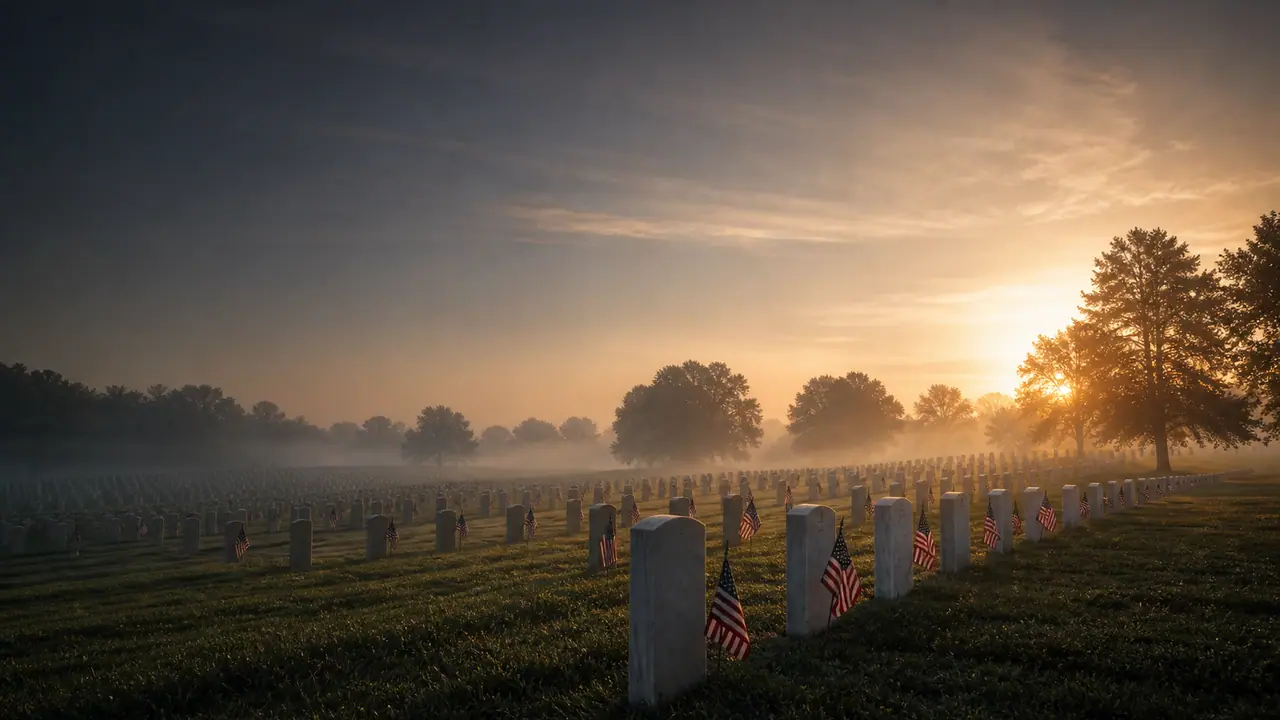
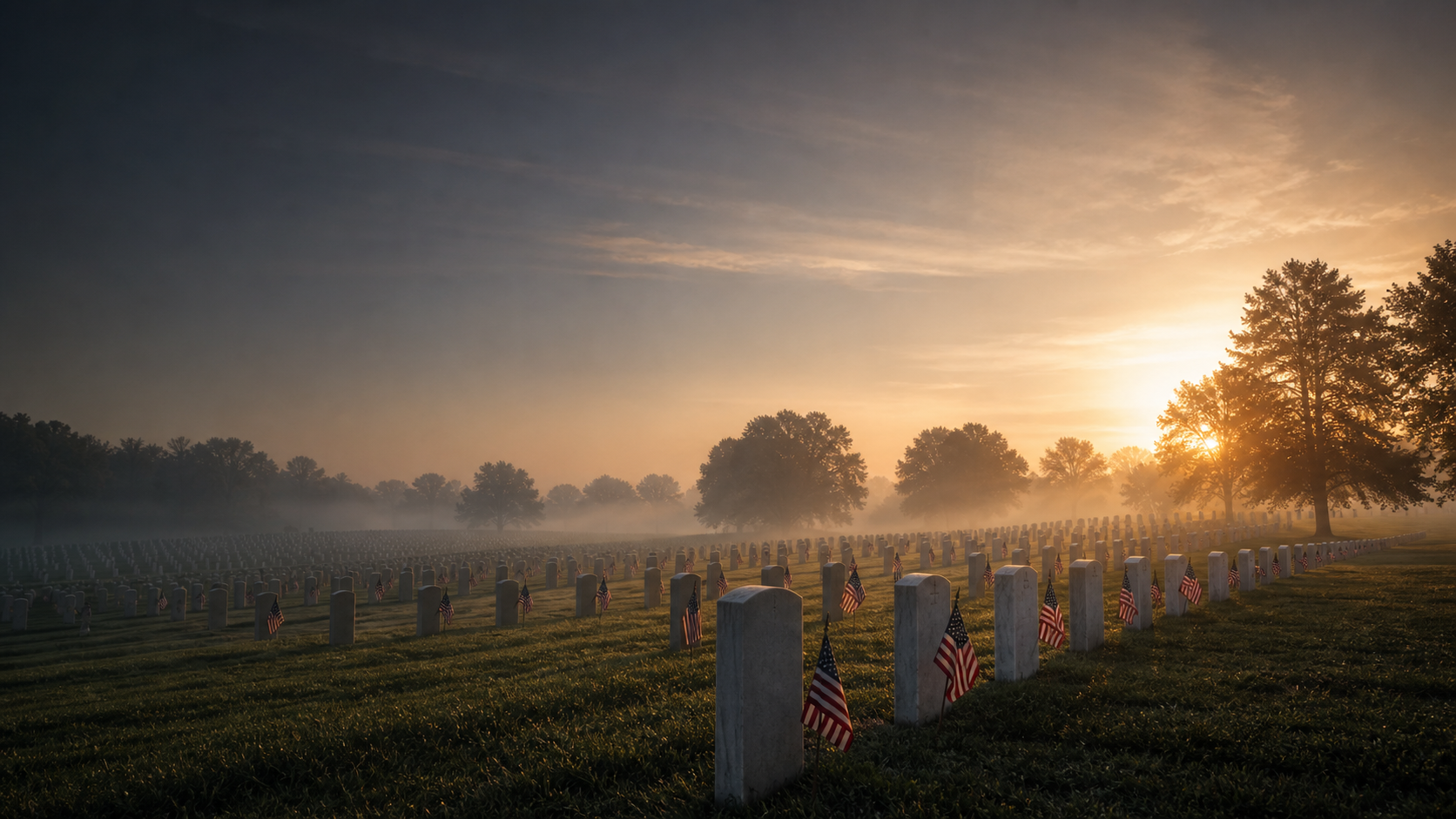
Visiting cemeteries remains one of the holiday’s oldest practices. Families, veterans, service members, scouts, civic groups, and volunteers place flowers, wreaths, or American flags at graves. At many national cemeteries, organized flag-placement programs mark thousands of headstones before the holiday.
Federal flag protocol traditionally calls for the United States flag to be flown at half-staff until noon on Memorial Day and then raised to full staff for the remainder of the day. The morning position expresses mourning, while raising the flag symbolizes the continuation of the nation and the commitment of the living. Local practices may include rifle salutes, prayers, readings of names, bugle calls, and moments of silence.
Arlington and the Tomb of the Unknown Soldier
Arlington National Cemetery remains a central setting for national Memorial Day ceremonies. Presidents, defence officials, military leaders, veterans, and bereaved families gather there for wreath-laying and commemorative addresses. The cemetery’s rows of headstones have become among the holiday’s most recognizable images.
The Tomb of the Unknown Soldier adds another dimension to the observance. Dedicated in 1921, the tomb represents unidentified and missing service members whose individual stories may be unknown. Ceremonies there connect personal loss with national remembrance and acknowledge that war can leave families without remains, confirmed burial places, or complete answers.
The National Moment of Remembrance
In 2000, Congress established the National Moment of Remembrance. Americans are encouraged to pause voluntarily at 3:00 p.m. local time on Memorial Day for one minute of silence or reflection. The time was chosen to create a shared act of remembrance during a day otherwise observed through many different local and personal activities.
The moment does not replace cemetery ceremonies or religious services. It offers a simple practice accessible to people wherever they are, including those travelling, working, attending community events, or gathering with family.
Public culture and the beginning of summer
Because Memorial Day falls near the end of May and creates a three-day weekend, it has become associated with the beginning of the American summer season. Beaches, parks, swimming pools, tourist destinations, road travel, sporting events, cookouts, and retail promotions commonly accompany the holiday.
This recreational meaning has existed alongside criticism that commercial activity can overshadow commemoration. The two uses of the weekend are not always mutually exclusive: families may visit a cemetery or attend a ceremony before gathering socially. The tension nevertheless remains part of modern Memorial Day, especially when public language treats the holiday mainly as a sale or vacation.
Historical timeline
1861–1865: The Civil War produces mass military death, national cemeteries, extensive reburial work, and new public practices of mourning.
May 1865: Black residents of Charleston, South Carolina, organize a large commemoration at a burial site for Union prisoners of war.
1866: Organized grave-decoration ceremonies take place in several communities, including Waterloo, New York, and Columbus, Mississippi.
May 5, 1868: Grand Army of the Republic commander John A. Logan issues General Orders No. 11 calling for a national Decoration Day.
May 30, 1868: The first nationally promoted Decoration Day is observed, including a major ceremony at Arlington National Cemetery.
Late nineteenth century: May 30 observances spread, while many Southern states maintain separate Confederate memorial dates.
After World War I: The holiday increasingly honors Americans who died in all wars rather than only the Civil War.
1950: Congress asks the president to proclaim Memorial Day as a day of prayer for permanent peace.
1966: President Lyndon B. Johnson signs a proclamation recognizing Waterloo, New York, as an official birthplace of Memorial Day, although other origin claims remain historically significant.
1968: The Uniform Monday Holiday Act is enacted, moving the federal observance from May 30 to the last Monday in May.
1971: The Monday observance takes effect and Memorial Day is implemented under the new federal holiday schedule.
2000: Congress establishes the National Moment of Remembrance at 3:00 p.m. local time.
Memorial Day today
Memorial Day today combines national ceremony, local tradition, and private grief. It may be observed at Arlington National Cemetery, a small-town monument, a military grave overseas, a place of worship, a family burial plot, or through a quiet moment at home. The form varies, but the holiday’s central subject is the human loss created by military service and war.
Its history also reminds Americans that remembrance is never entirely neutral. Choices about whose graves are decorated, which wars are discussed, which stories are included, and how sacrifice is interpreted shape national memory. Memorial Day endures because it provides a recurring space to honor the dead while asking the living to consider the meaning and cost of that sacrifice.
Sources and further reading
- U.S. Department of Veterans Affairs, National Cemetery Administration, Memorial Day History
- U.S. Department of Veterans Affairs, Memorial Day Order
- U.S. Department of Veterans Affairs, Memorial Day
- Library of Congress, Today in History: May 30
- Library of Congress, From Decoration Day to Memorial Day
- Library of Congress, From Decoration Day to Memorial Day: Historical Images
- Arlington National Cemetery, Arlington National Cemetery and the Origins of Memorial Day
- Arlington National Cemetery, History of Arlington National Cemetery
- Arlington National Cemetery, Flowers of Remembrance
- U.S. Department of Veterans Affairs, The Origins of Memorial Day
Traditions
Moments of silence
Family gatherings over the long weekend
Visiting cemeteries
How It Is Celebrated
Communities hold memorial ceremonies, place flags at graves, visit cemeteries, observe moments of remembrance and gather for family events. The holiday has a leisure side, but its civic purpose is remembrance. Local calendars remain the best reference for how Memorial Day is marked in a particular place.
Interesting Facts
- Memorial Day is not the same as Veterans Day.
- It is observed on the last Monday in May.
- Its roots include post-Civil War Decoration Day customs.
- It honors those who died in military service.
- Many U.S. flags are flown at half-staff until noon.
Related Holiday Guides
United States holidays →
Questions
Memorial Day FAQ
Clear answers about the date, countdown target and seasonal context.
Who does Memorial Day honor?
It honors U.S. military personnel who died while serving. This guidance applies specifically to Memorial Day.
When is Memorial Day?
It is the last Monday in May. This guidance applies specifically to Memorial Day.
Is Memorial Day the same as Veterans Day?
No. Veterans Day honors veterans broadly; Memorial Day remembers those who died in service.
Why does the date move?
The federal observance is set by weekday rule, not by a fixed month and day. This guidance applies specifically to Memorial Day.
What is Decoration Day?
Decoration Day was an earlier name and practice connected with decorating graves. This guidance applies specifically to Memorial Day.