Christian Feast Countdown
(v) Scroll to discover more insights
How many days until
All Saints' Day
All Saints' Day is a Christian feast observed on November 1 in many Western Christian calendars. It honors saints and faithful witnesses, and it sits within the same early-November remembrance season as All Souls' Day and Day of the Dead.
More holidays in November
79Days
00Hours
00Minutes
00Seconds
Quick Facts
About All Saints' Day
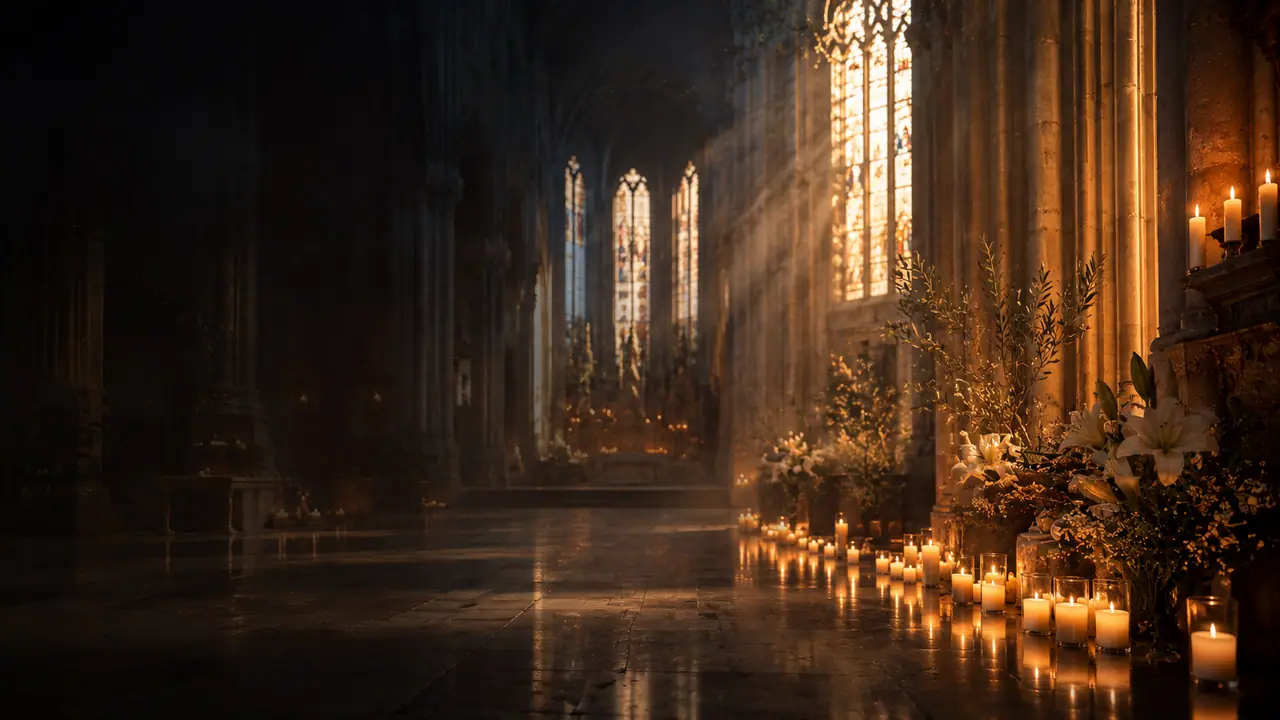
All Saints' Day focuses on honoring saints known and unknown. In many places it includes church services, candlelight, cemetery visits, family remembrance, and a quieter reflective tone after Halloween. Denominations and countries may emphasize different saints, readings, public-holiday customs, and forms of remembrance.
History of All Saints' Day
Introduction
All Saints’ Day is a Christian feast honoring all saints, known and unknown. In the Roman Catholic Church and many Western Christian traditions, it is observed on November 1. The day celebrates the communion of saints: the belief that the faithful across time are joined in one spiritual community. It is distinct from All Souls’ Day on November 2, which focuses on prayer and remembrance for the faithful departed.
The observance did not originate in a single moment. It developed from early commemorations of martyrs, the dedication of churches to groups of saints, changes in the liturgical calendar, and the gradual extension of a feast once focused on martyrs to encompass all holy people.
From martyrs to all saints
Early Christian communities honored martyrs who had died for their faith. Individual martyrs were often commemorated on the anniversaries of their deaths, and local churches preserved their names and stories. Periods of persecution produced so many martyrs that communities sometimes remembered groups together rather than assigning every person a separate feast.
By the fourth century, collective commemorations of martyrs were held in several regions, though not always on the same date. Eastern Christian churches developed their own feast of all saints, commonly observed on the Sunday after Pentecost. This remains the practice in much of Eastern Orthodoxy, showing that All Saints is a shared Christian idea with differing calendars.
The Pantheon and the Roman feast
A major landmark occurred in 609 or 610, when Pope Boniface IV dedicated the Pantheon in Rome as the church of Saint Mary and the Martyrs. The dedication was associated with a feast in May. The transformation of a prominent Roman building into a Christian church dedicated to Mary and all martyrs gave collective commemoration a powerful public setting.
In the eighth century, Pope Gregory III dedicated a chapel in St Peter’s Basilica to the apostles, martyrs, confessors, and all the righteous. This dedication was associated with November 1. Pope Gregory IV later encouraged wider observance of the November feast in the ninth century. Through Carolingian influence and the expansion of Roman liturgical practice, November 1 became established across much of Western Europe.
Medieval observance and popular customs
During the Middle Ages, All Saints’ Day became one of the major feasts of the church year. Worship centered on Mass, prayer, readings, hymns, and reflection on the examples of holy lives. The feast included canonized saints but also countless people believed to be with God whose names were never formally recorded.
The evening before November 1 was known as All Hallows’ Eve, later shortened to Halloween. Its history includes Christian vigils as well as regional customs concerning winter, death, disguise, protection, and the supernatural. Halloween, All Saints’ Day, and All Souls’ Day form the three-day period sometimes called Allhallowtide, but they should not be treated as identical celebrations.
Customs surrounding the feast varied. Churches displayed relics, communities held processions, and households offered food or hospitality. In some regions, later traditions of visiting graves and remembering family members blurred the practical boundary between All Saints and All Souls, even though the liturgical purposes remained distinct.
Reformation and denominational differences
The Protestant Reformation changed the observance in many countries. Reformers rejected or revised teachings about the intercession of saints and the veneration of relics. Some Protestant churches discontinued the feast, while others retained it as a commemoration of faithful Christians and witnesses to the gospel. Anglican and Lutheran calendars commonly preserve All Saints’ Day, though theology and practice differ from Roman Catholic traditions.
In modern ecumenical usage, the feast may emphasize both famous saints and ordinary people whose lives expressed courage, service, justice, compassion, or faith. Churches may read the names of members who died during the past year, although that practice can also be connected to All Souls or a separate memorial service.
Historical timeline
Second to fourth centuries: Christian communities develop local commemorations for martyrs and begin honoring groups of martyrs together.
Fourth century: Collective feasts of martyrs and saints are documented in several Christian regions.
609 or 610: Pope Boniface IV dedicates the Pantheon in Rome to Saint Mary and the Martyrs.
Eighth century: Pope Gregory III dedicates a chapel in St Peter’s Basilica to all saints and associates it with November 1.
Ninth century: November 1 becomes widely established as the Western feast of All Saints.
Sixteenth century: Reformation churches retain, reinterpret, or discontinue the observance according to differing views of saints and worship.
Modern era: All Saints’ Day remains a major Catholic holy day and is observed in many Anglican, Lutheran, Methodist, and other Christian communities.
All Saints' Day today
Today, Roman Catholics observe All Saints’ Day as a solemnity, and in many places it is a holy day of obligation. Worship may include the Beatitudes, litanies, music, and reflection on holiness. In some countries it is also a public holiday, and families visit cemeteries, clean graves, light candles, and gather in remembrance.
The day carries different cultural meanings across Europe, Africa, Asia, Oceania, and the Americas. It should not be reduced to a universal set of customs, and it should not be confused with Día de los Muertos, which has its own Indigenous, Catholic, national, and regional histories. At its core, All Saints’ Day honors the full community of saints, including people whose faithful lives were never widely known.
Sources and further reading
Traditions
Visiting cemeteries in some countries
Preparing seasonal family meals
Attending church services
How It Is Celebrated
Observance may include liturgy, prayer, hymns, candlelight, flowers, and cemetery visits. In some countries All Saints' Day is a public holiday, while in others it is mainly marked within churches and families. Local church calendars remain the best source for service times and denomination-specific practice.
Interesting Facts
- All Saints' Day is fixed on November 1 in many Western churches.
- It is connected to the word Halloween through All Hallows' Eve.
- Customs vary by denomination and country.
- Some countries treat it as a public holiday.
- The next countdown target updates automatically each year.
Related Holiday Guides
Holiday directory →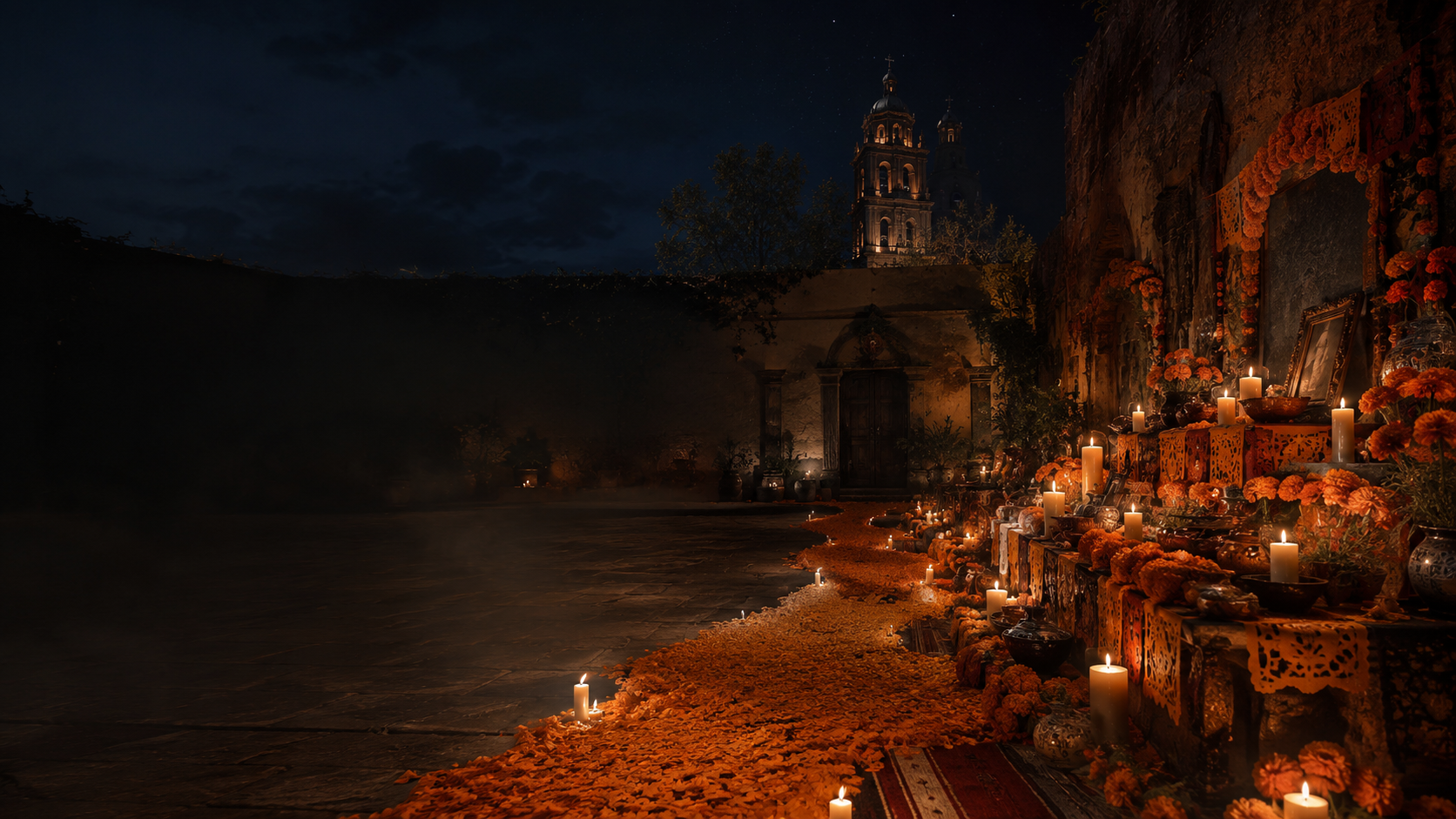 Holiday DirectoryBrowse remembrance, religious, and seasonal countdowns connected to early November observances.→
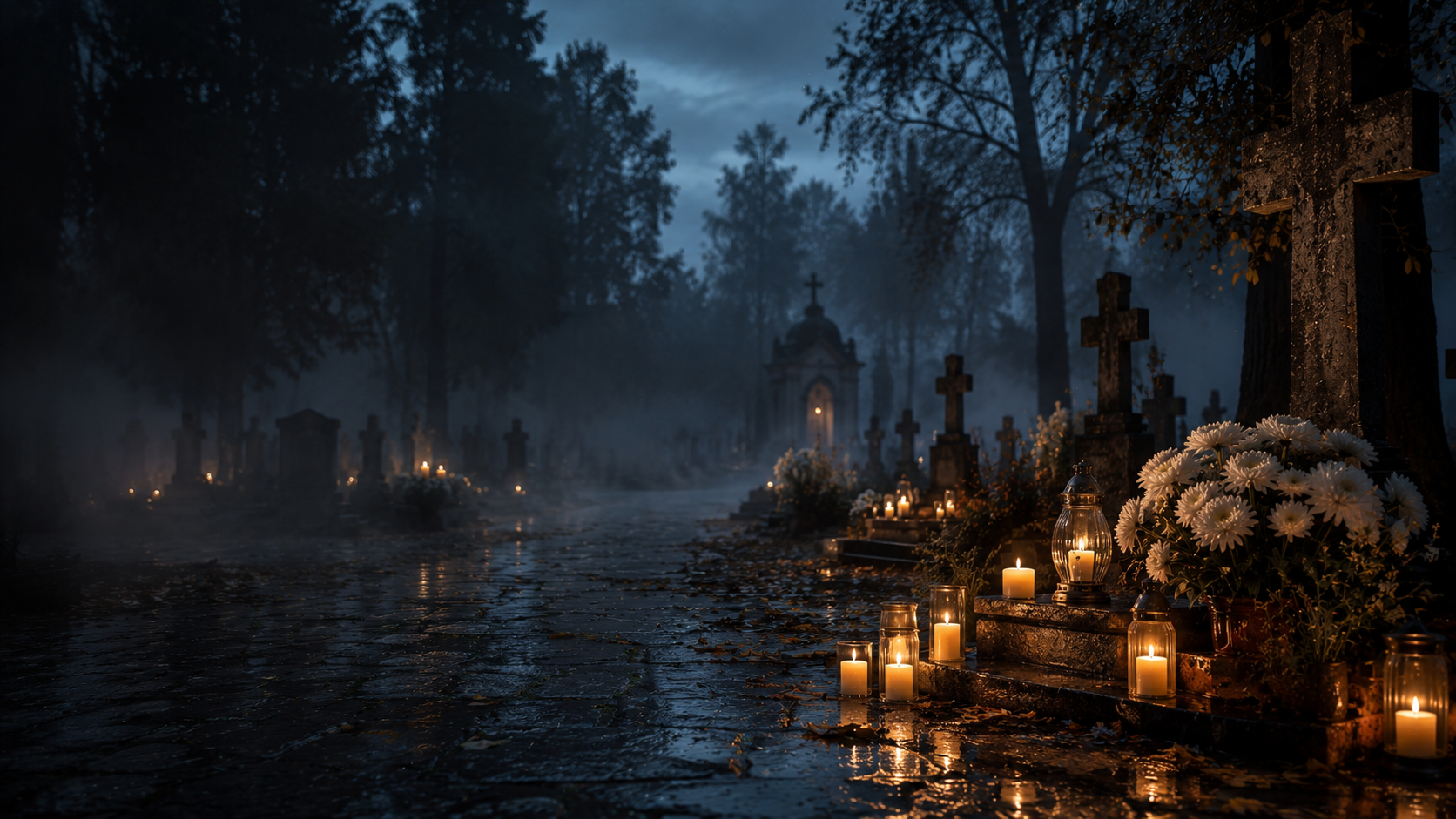 Upcoming HolidaysFollow the calendar from Halloween through All Saints' Day, All Souls' Day, and late-autumn holidays.→
 Halloween CountdownCompare the October 31 countdown with the remembrance-focused pages that follow in early November.→
 Thanksgiving CountdownContinue from the early-November remembrance season into the next major late-autumn holiday.→
Questions
All Saints' Day FAQ
Clear answers about the date, countdown target and seasonal context.
When is All Saints' Day?
All Saints' Day is observed on November 1 in many Western Christian traditions.
Is All Saints' Day related to Halloween?
Yes. Halloween means All Hallows' Eve, the evening before All Saints' Day.
Is it the same as All Souls' Day?
No. All Souls' Day is observed on November 2 in many traditions.
Is All Saints' Day a public holiday?
It is a public holiday in some countries, but not everywhere.
Does the countdown roll forward?
Yes. After November 1 passes, the page targets the next November 1.