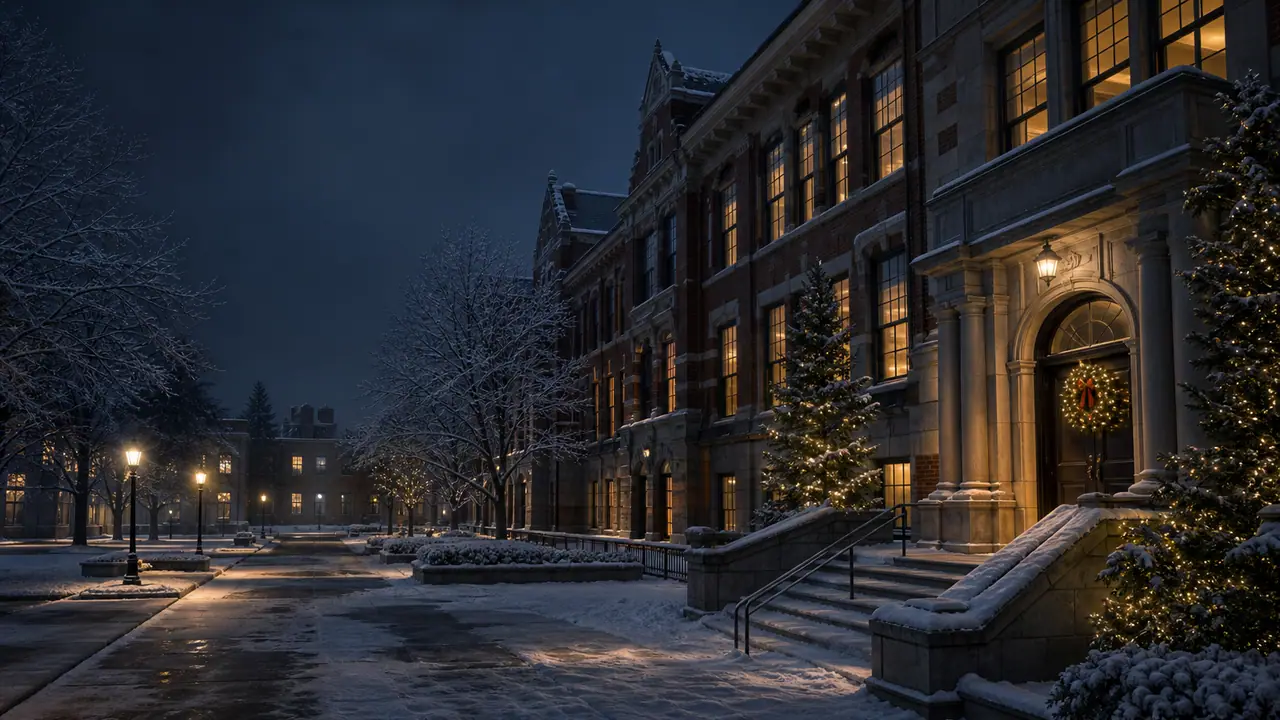
School Break Countdown
(v) Scroll to discover more insights
How many days until
Christmas Break
Christmas Break dates vary by country, district, school, and academic calendar. This countdown uses December 20 as a clearly labeled default reference date for planning, while the page explains that actual school break start dates may be different in your area.
More holidays in December
128Days
00Hours
00Minutes
00Seconds
Quick Facts
About Christmas Break
For students, families, and teachers, Christmas Break usually means the point where school schedules pause and late-December planning becomes real. People search for it when they need to compare school closure timing with family travel, childcare, work leave, or Christmas week routines. Because public schools, private schools, universities, and regional authorities all publish different calendars, the page is framed as a planning reference rather than a claim that every school begins break on the same day.
History of Christmas Break
Introduction
Christmas break is the period when schools, universities, workplaces, or public institutions close or reduce activity around Christmas and New Year. It has no single worldwide length or legal definition.
The break developed from Christian feast days, agricultural and academic calendars, industrial labor rules, public holidays, and modern travel patterns. In multicultural societies it is often called winter break or holiday break.
Religious calendar
Christmas Day became a major Christian feast in late antiquity, while surrounding days included Saint Stephen's Day, Holy Innocents, New Year observances, and Epiphany.
Church calendars created clusters of worship and rest, but ordinary people did not necessarily receive a continuous vacation.
Medieval schools
Cathedral, monastic, and university calendars included feast-day interruptions and seasonal terms.
The duration depended on institution, local economy, church authority, and travel conditions.
Agricultural season
Winter reduced some forms of field labor in northern climates but increased domestic, craft, forestry, and animal-care work.
The idea that everyone historically rested for weeks at Christmas is inaccurate.
Industrial work
Factories and shops often required long hours during the nineteenth century, and paid vacation was limited.
Labor movements gradually won shorter hours, public holidays, weekends, and annual leave.
School calendars
Mass public education created standardized terms and closures. Christmas holidays allowed buildings to close, teachers and pupils to travel, and local authorities to coordinate schedules.
Calendars remained regional because climate, examinations, religion, and law differed.
Boxing Day and public holidays
Countries influenced by British traditions often recognize December 26 as Boxing Day or another public holiday.
Legal status varies, and a school closure does not automatically create paid leave for every worker.
United States winter vacation
U.S. schools commonly close from shortly before Christmas until after New Year, but districts set their own calendars.
The constitutional separation of church and state and diverse student populations encouraged neutral terms such as winter break.
Universities
Universities often have a longer interval between autumn and spring terms.
Students may use the period for travel, work, research, family care, religious observance, or rest.
Workplace shutdowns
Some employers close between Christmas and New Year, while others require annual leave or continue operating.
Health care, transport, hospitality, emergency services, retail, logistics, and utilities often remain active.
Paid leave
A closure is not the same as paid vacation. Entitlement depends on national law, contracts, unions, employer policy, and employment status.
Temporary, migrant, hourly, and platform workers may have little paid time even when offices close.
Travel
Christmas break became a major travel period with railways, automobiles, aviation, and tourism.
High demand raises prices and creates congestion, weather disruption, emissions, and pressure on transport workers.
Family expectations
The break can support family reunion and cultural tradition.
It can also intensify conflict, loneliness, care burdens, grief, and financial pressure.
Children and inequality
Time away from school may provide rest but also interrupt meals, disability services, counseling, internet access, and safe supervision.
Holiday programs and community services help address unequal effects.
Multicultural inclusion
Not all families celebrate Christmas, and some observe Hanukkah, Kwanzaa, New Year, or other traditions.
Inclusive calendars allow religious accommodation without assuming one shared belief.
Pandemic disruption
COVID-19 altered travel, school closures, remote learning, and family gatherings.
The period highlighted inequalities in housing, digital access, care work, and paid leave.
Mental health and rest
A break can reduce routine pressure, but sudden isolation or disrupted support may harm some people.
Accessible services and realistic expectations are important.
Climate differences
The break occurs in winter in the Northern Hemisphere and summer in the Southern Hemisphere.
Images of snow and darkness do not represent Christmas conditions globally.
Modern debate
Institutions balance tradition, attendance, examinations, energy costs, staff contracts, and community diversity.
No universal calendar can represent every jurisdiction.
Wider context
Calendar language remains politically and culturally sensitive. A school may close for practical reasons while using an inclusive name, and families may understand the same interval differently. Administrators must also consider examinations, transportation, meal programs, disability support, staff contracts, weather, energy use, and the needs of families who cannot take leave at the same time.
Calendar language remains politically and culturally sensitive. A school may close for practical reasons while using an inclusive name, and families may understand the same interval differently. Administrators must also consider examinations, transportation, meal programs, disability support, staff contracts, weather, energy use, and the needs of families who cannot take leave at the same time.
Wider context
Calendar language remains politically and culturally sensitive. A school may close for practical reasons while using an inclusive name, and families may understand the same interval differently. Administrators must also consider examinations, transportation, meal programs, disability support, staff contracts, weather, energy use, and the needs of families who cannot take leave at the same time.
Calendar language remains politically and culturally sensitive. A school may close for practical reasons while using an inclusive name, and families may understand the same interval differently. Administrators must also consider examinations, transportation, meal programs, disability support, staff contracts, weather, energy use, and the needs of families who cannot take leave at the same time.
Wider context
Calendar language remains politically and culturally sensitive. A school may close for practical reasons while using an inclusive name, and families may understand the same interval differently. Administrators must also consider examinations, transportation, meal programs, disability support, staff contracts, weather, energy use, and the needs of families who cannot take leave at the same time.
Calendar language remains politically and culturally sensitive. A school may close for practical reasons while using an inclusive name, and families may understand the same interval differently. Administrators must also consider examinations, transportation, meal programs, disability support, staff contracts, weather, energy use, and the needs of families who cannot take leave at the same time.
Wider context
Calendar language remains politically and culturally sensitive. A school may close for practical reasons while using an inclusive name, and families may understand the same interval differently. Administrators must also consider examinations, transportation, meal programs, disability support, staff contracts, weather, energy use, and the needs of families who cannot take leave at the same time.
Calendar language remains politically and culturally sensitive. A school may close for practical reasons while using an inclusive name, and families may understand the same interval differently. Administrators must also consider examinations, transportation, meal programs, disability support, staff contracts, weather, energy use, and the needs of families who cannot take leave at the same time.
Historical timeline
Fourth century: Christmas becomes established as a major Christian feast.
Medieval period: Church and educational calendars organize closures around feast days.
Nineteenth century: Industrialization and public schooling create more standardized schedules.
Late nineteenth–twentieth centuries: Labor movements expand paid holidays and annual leave.
Post-1945: Mass travel and longer school terms shape the modern break.
Late twentieth century: Winter break and holiday break become common inclusive terms.
2020–2021: Pandemic restrictions transform closures and travel.
Today: Christmas break varies by school, workplace, country, and legal system.
Christmas Break today
No universal calendar can represent every jurisdiction.
The strongest accounts place the observance in its social and historical context, distinguish custom from legal status, and avoid presenting one family, school, market, or national practice as universal.
Sources and further reading
Traditions
Starting winter reading or activities
Preparing for Christmas week at home
Finishing school events or concerts
How It Is Celebrated
Families often use Christmas Break for travel, rest, childcare planning, winter activities, and holiday gatherings. Schools may close for a few days or several weeks depending on the region and education system.
Interesting Facts
- There is no single worldwide Christmas Break date.
- This page uses December 20 as a default reference.
- School districts publish their own calendars.
- Universities may follow different dates from local schools.
- The countdown should be treated as planning guidance only.
Related Holiday Guides
Christmas guide → Christmas GuideA clear overview of Christmas history, dates, symbols and traditions.→
Christmas TraditionsExplore trees, gifts, meals, carols and family rituals.→
Christmas HistoryLearn how Christmas developed through religious and cultural history.→
Christmas Around the WorldSee how Christmas customs vary across countries and communities.→
Christmas GuideA clear overview of Christmas history, dates, symbols and traditions.→
Christmas TraditionsExplore trees, gifts, meals, carols and family rituals.→
Christmas HistoryLearn how Christmas developed through religious and cultural history.→
Christmas Around the WorldSee how Christmas customs vary across countries and communities.→Questions
Christmas Break FAQ
Clear answers about the date, countdown target and seasonal context.
Is Christmas Break the same date everywhere?
No. It varies by country, region, school district, and institution.
What date does this page count down to?
It uses December 20 as a default reference date.
Should I rely on this for my school calendar?
No. Always check your school or district's official calendar.
Why use a reference date?
The project does not currently have localized school calendar data for every region.
Does the countdown update each year?
Yes. It rolls to the next December 20 after the reference date passes.