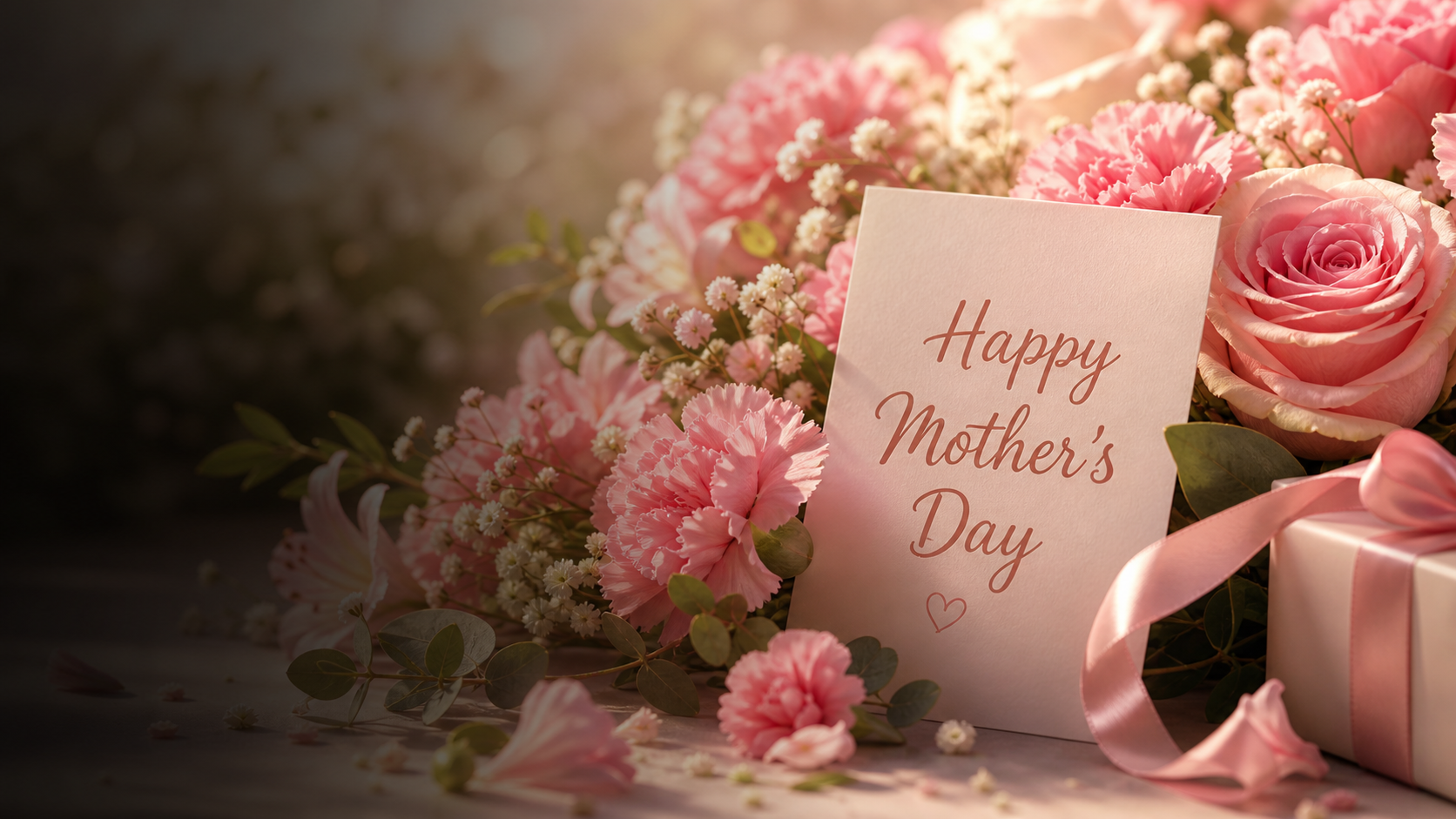
Mother’s Day symbols are not limited to pink flowers and greeting cards. The white carnation, family meal, handmade drawing and spring date each carry a different history of remembrance, gratitude and care.
This guide explains where these symbols come from and how families use them today without treating one commercial style as universal.
The carnation and Anna Jarvis’s original idea
The carnation became closely associated with Mother’s Day in the United States because Anna Jarvis chose her mother’s favorite flower for the first official service she organized in 1908. White carnations were distributed to people attending the service, and Jarvis promoted the flower as an emblem of the tenderness and sacrifice she believed the day should honor.
The symbol had a personal beginning, not an ancient worldwide rule. As the holiday expanded, florists and churches helped turn the carnation into a recognizable public badge. That history also contains a tension: Jarvis wanted a “holy day” of personal gratitude, while the floral and card industries saw a large seasonal market.
White, red and pink carnations
White carnations are often used to remember a mother who has died, while red or pink carnations have been associated with a living mother. This distinction became popular through churches and florists rather than through a single universal decree. Families may use the colors differently, and many now choose any flower their mother enjoys.
The carnation has older meanings beyond Mother’s Day. Its bright color made it a sign of love in European art, and the Greek name is connected with the “flower of God.” The Metropolitan Museum notes that carnations could suggest divine love, earthly love and marriage in different artistic settings. Mother’s Day borrowed a flexible flower and gave it a new family meaning.
Flowers as gratitude—and as a commercial language
Flowers work as a Mother’s Day symbol because they are gifts that require attention: they are chosen, arranged, delivered and cared for. A bouquet can express appreciation without asking a child to explain every feeling. At the same time, flowers are perishable and seasonal, which made them ideal for a yearly retail campaign.
Anna Jarvis later objected to price increases and the commercialization of the holiday. Understanding that objection adds historical depth to the bouquet. Giving flowers today can honor the original personal meaning, but it can also be replaced by a letter, visit, recipe or act of service when that better fits the relationship.
Cards, handwriting and the personal message
A card symbolizes a message that can be kept. Printed cards made it possible to send affection across distance, while a handwritten note adds a specific memory: a meal someone taught you to cook, a journey, a joke or a difficult year survived together. The most useful Mother’s Day card is not the one with the loudest slogan; it is the one that names the care being recognized.
Schools often turn the card into a handmade craft. Drawings, painted flowers and paper portraits give children a way to participate before they can buy a gift. These classroom objects also show how the holiday has expanded beyond biological motherhood to include grandmothers, foster mothers, stepmothers, guardians and other caregivers.
Food, breakfast and the family table
Breakfast in bed, brunch, tea and a family dinner are modern symbols of reversing the usual care routine. The people who are often fed and organized by a mother take responsibility for preparing, serving and cleaning up. The meal therefore represents labor as well as affection.
There is no single Mother’s Day dish. A household may cook a favorite regional meal, bake a family recipe or reserve a table at a restaurant. In Mexico, music and a shared meal can accompany a May 10 celebration; in Ethiopia, Antrosht uses a communal feast to honor motherhood. Food becomes meaningful when it recalls the person and the culture, not when it follows a generic brunch menu.
Spring, growth and the date of the holiday
Many countries celebrate Mother’s Day in May, when spring flowers and new growth make an intuitive visual backdrop in the northern hemisphere. But the date is not universal. The United Kingdom’s Mothering Sunday follows the fourth Sunday of Lent, Thailand uses August 12, and Ethiopia’s Antrosht follows the rainy season. A spring graphic should not be presented as the origin of every Mother’s Day.
Seasonal imagery is powerful because it connects family life with renewal. It can also exclude families in another hemisphere or climate. A thoughtful page names the local calendar before explaining the flower, food or color being used.
Family portraits, hands and acts of care
Photographs, children’s handprints, recipe cards and family trees are common visual symbols because Mother’s Day is about relationships over time. A portrait can honor memory; a handprint shows growth; a recipe records knowledge passed between generations. These symbols are more specific than a generic heart because they point to an actual shared history.
Modern celebrations may include chosen family and people whose care is not captured by the word “mother.” The symbol should open that recognition rather than enforce a narrow household model. A phone call, accessibility-aware visit or practical help can carry the same meaning as a flower.
Using Mother’s Day symbols thoughtfully
Choose symbols with a clear reason. Use carnations when their history or personal connection matters, a meal when shared time is the point, and a handwritten note when memory needs words. Explain regional differences instead of claiming that every country uses pink flowers on the second Sunday of May.
For the date and international comparisons, read Mother’s Day around the world. For the historical timeline, visit the history of Mother’s Day, then explore Mother’s Day traditions and Mother’s Day food.
Sources and further reading
History’s account of Mother’s Day carnations explains the connection to Anna Jarvis and the later commercial tension. The Metropolitan Museum’s botanical imagery essay provides context for the carnation’s older meanings in European art.