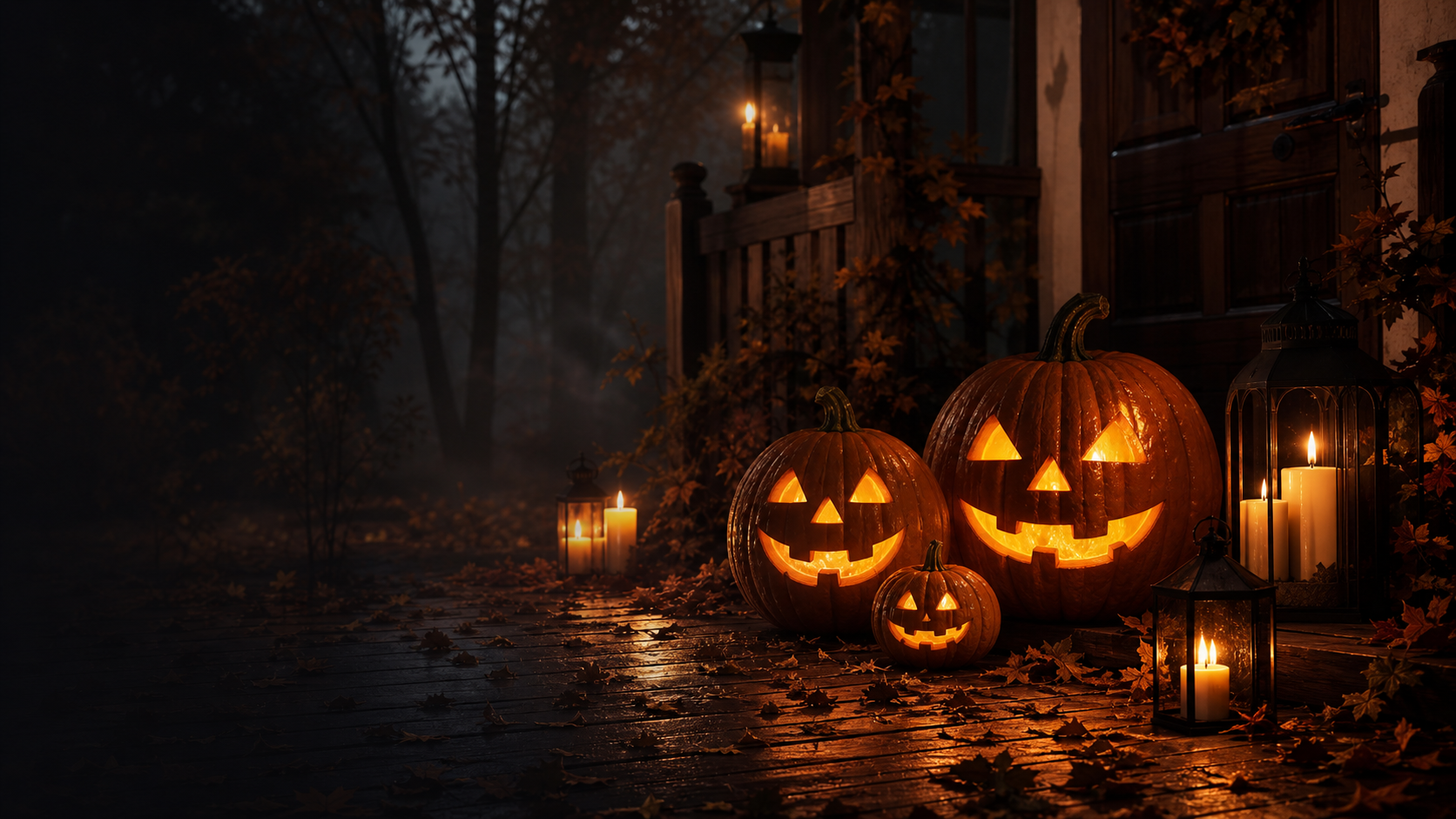
Halloween symbols are a layered record of harvest, spirits, folklore, religion and modern entertainment. The jack-o’-lantern began with carved turnips in Ireland, while bats, black cats, witches and ghosts gained meanings through different periods and media.
This guide explains those layers so a pumpkin decoration is not mistaken for the whole history of Halloween.
Why Halloween relies on symbols
Halloween sits near the seasonal boundary between harvest and winter in the northern hemisphere. Older observances around this time imagined a thinner boundary between the living and the dead, while later Christian calendars placed All Saints’ and All Souls’ observances nearby. Modern Halloween turns those ideas into costumes, decorations, games and stories.
A symbol can therefore be frightening, protective or playful. The same skull may represent death in one setting, a joke in another, or remembrance in a Día de los Muertos context. Good Halloween writing names the tradition instead of blending every autumn symbol into one origin story.
Jack-o’-lanterns: from Irish turnips to American pumpkins
In Ireland and parts of Britain, people carved turnips or other root vegetables into faces and placed lights inside. The National Museum of Ireland describes a ghost turnip and connects the name Jack o’ Lantern with the folktale of a wandering Jack who carried a lantern after being accepted by neither Heaven nor Hell. The carved face could frighten away harmful spirits or embody the story.
When Irish immigrants brought the custom to North America, pumpkins were larger, softer and easier to carve. The material changed, and the pumpkin became a dominant American Halloween image. That does not mean the practice started with pumpkins or that the Irish folktale is a literal explanation accepted by every historian.
Black cats and the history of the familiar
Black cats became associated with Halloween through medieval European ideas about witchcraft, the Devil and animal familiars. The Library of Congress notes that cats, particularly black cats, were linked with accused witches in later folklore. Popular cards, films and decorations then repeated the image until it became a standard spooky shorthand.
The symbol is a history of superstition, not evidence that black cats are dangerous. Modern shelters and animal welfare groups have also challenged the use of black cats as seasonal props. A respectful decoration can acknowledge the folklore while treating real animals as living creatures, not omens.
Bats, owls and the night landscape
Bats are practical Halloween symbols as well as artistic ones. Bonfires and outdoor night gatherings could attract insects, and bats might be visible around the light. The animal’s nocturnal movement, hidden roosts and association with caves made it easy for later stories to connect bats with mystery and the supernatural.
Owls, ravens and spiders perform a similar visual job. They live at the edges of ordinary daytime experience and appear in gothic literature, haunted-house design and horror cinema. Their meaning is cultural rather than biological: real bats and owls are important wildlife, while the Halloween image exaggerates their otherness.
Witches, cauldrons and broomsticks
The witch costume combines several histories: early modern witch trials, folk healers and wise women, literary witches, and twentieth-century costume design. Pointed hats, broomsticks and cauldrons are not a complete portrait of historical people accused of witchcraft. They are a simplified theatrical vocabulary that makes a character recognizable at a glance.
The cauldron can suggest transformation, cooking, poison or ritual. The broom can suggest domestic work turned magical and the power of flight. Today, witches may be frightening, funny, glamorous or feminist figures. The variation shows how a symbol changes when popular culture reinterprets it.
Ghosts, skeletons and the boundary with Día de los Muertos
Ghosts and skeletons connect Halloween with stories about death and the return of the dead. The Library of Congress links Halloween’s development to Celtic and Catholic contact and notes that All Souls’ Day helped preserve the seasonal idea of contact between the living and the dead. Modern ghosts are often costume characters or decorations rather than religious figures.
Halloween should not be treated as interchangeable with Día de los Muertos. The Smithsonian explains that brightly decorated skulls in Día de los Muertos can serve as reminders of life’s cycle and family remembrance, not simply as “spooky” Halloween props. Similar objects can carry different meanings across traditions.
Orange, black and the harvest palette
Orange naturally fits Halloween because pumpkins, leaves and autumn harvests appear in that color. Black suggests night, death, shadow and the unknown. Purple, green and white entered later through costume, advertising and fantasy design. The palette is powerful because it makes a doorway or party table feel like a temporary night world.
Colors do not have one ancient code. A black cat, orange pumpkin and purple witch hat become “Halloween” because repeated print, television, film and retail design teach viewers to read them together.
Using Halloween symbols responsibly
Explain the difference between folklore, history and modern entertainment. Carve a pumpkin while acknowledging the earlier turnip tradition; use a black cat image without treating real cats as bad luck; and do not borrow Día de los Muertos imagery as generic spooky decoration.
For repeated activities, read Halloween traditions. For the historical timeline, visit the history of Halloween, then compare Halloween food and Halloween around the world.
Sources and further reading
The Library of Congress explains turnip lanterns, black cats, Samhain and trick-or-treating. The National Museum of Ireland documents the ghost turnip. The Smithsonian distinguishes Día de los Muertos symbolism from Halloween imagery.