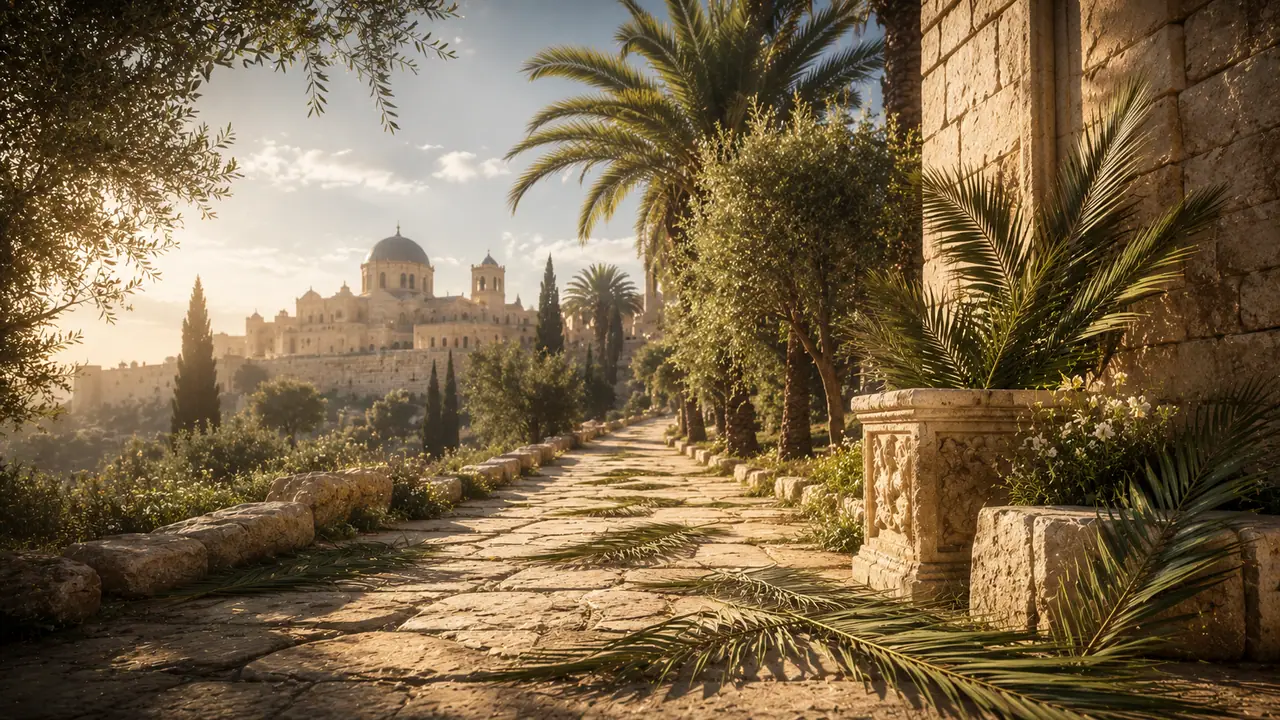
Holy Week Countdown
(v) Scroll to discover more insights
How many days until
Palm Sunday
Palm Sunday is observed one week before Easter Sunday and marks the beginning of Holy Week in many Christian traditions. This countdown calculates the date from Western Easter each year.
More holidays in March
219Days
00Hours
00Minutes
00Seconds
Quick Facts
About Palm Sunday
Palm Sunday commemorates Jesus' entry into Jerusalem and is often marked with palm branches, processions, scripture readings, hymns, and church services. It opens the sequence of observances leading to Easter.
History of Palm Sunday
Introduction
Palm Sunday is the Christian observance that begins Holy Week and commemorates Jesus’ entry into Jerusalem before his crucifixion. It falls on the Sunday before Easter, so its Gregorian date changes each year. In many churches, worship includes a procession with palms or other branches and a reading of the Passion narrative.
The day combines celebration and solemnity. The welcoming crowds and royal symbolism of the entry into Jerusalem are immediately set beside the suffering and death remembered later in Holy Week.
Biblical foundations
All four canonical Gospels describe Jesus entering Jerusalem. The accounts differ in detail, but they share themes of public acclamation, a humble mount, and the crowd’s recognition of Jesus in royal or messianic terms. The Synoptic Gospels describe branches or garments spread on the road, while the Gospel of John explicitly mentions palm branches.
The cry “Hosanna” comes from a Hebrew expression asking for salvation and became a liturgical acclamation. Christian interpretation also connected the event with passages from the Hebrew Bible, especially Zechariah’s image of a king arriving humbly on a donkey.
Early Christian commemoration
Christians remembered Jesus’ final days from the earliest centuries, but detailed evidence for Palm Sunday ceremonies appears especially clearly in late fourth-century Jerusalem. The pilgrim Egeria described a procession from the Mount of Olives into the city, with people carrying branches and singing hymns.
Jerusalem’s sacred geography shaped the ritual. Worshippers moved through places associated with the Gospel narrative. Pilgrims carried descriptions of these ceremonies back to other Christian regions.
Spread through East and West
Processions and branch blessings spread across Christian Europe and the Mediterranean. In places where palms were unavailable, worshippers used olive, willow, yew, box, or other local branches. This produced regional names such as Willow Sunday.
In the medieval West, Palm Sunday could include elaborate processions, dramatic representations of Christ’s entry, crosses wrapped in flowers, and the blessing of branches. The palms were often taken home and kept as devotional objects. In many Catholic communities, blessed palms from the previous year are burned to make ashes for Ash Wednesday.
Reformation and liturgical change
The Protestant Reformation altered Palm Sunday in many regions. Some reformers removed processions and blessed objects, while others retained readings and hymns. Anglican, Lutheran, Reformed, and later Protestant communities developed different practices.
In the Roman Catholic calendar, twentieth-century reforms revised Holy Week rites and emphasized participation by the congregation. Many churches now call the day Palm Sunday of the Passion of the Lord, highlighting both the entry and the Passion reading.
Global traditions
Palm Sunday spread worldwide through Christian missions, migration, empire, and local adaptation. Communities weave palm fronds into crosses, carry flowers, walk in outdoor processions, sing regional hymns, or use locally meaningful branches.
These practices should not be treated as identical. Orthodox, Catholic, Anglican, and Protestant calendars can differ, and Eastern churches may observe the feast on a different date when Easter calculations diverge.
Historical timeline
First century: The Gospel traditions describe Jesus’ entry into Jerusalem before the crucifixion.
Fourth century: Egeria records a Palm Sunday procession in Jerusalem.
Early medieval period: Branch blessings and processions spread in Eastern and Western Christianity.
High Middle Ages: Palm Sunday becomes a major public and dramatic observance in European churches.
Sixteenth century: Reformation churches retain, revise, or remove processions and sacramental customs.
Twentieth century: Liturgical reforms reshape Catholic Holy Week rites and congregational participation.
Modern era: Christians worldwide observe the day with diverse local materials and processions.
Palm Sunday today
Today, many churches begin worship outside or at the church entrance, bless branches, process into the building, and read the Passion. Some congregations distribute woven palm crosses or invite children to lead the procession.
The observance is both joyful and reflective. It introduces the central events of Holy Week and prepares worshippers for Maundy Thursday, Good Friday, Holy Saturday, and Easter.
Sources and further reading
Traditions
Holy Week preparation
Spring worship services
Palm branches or crosses
How It Is Celebrated
Communities may gather for services, carry palm branches, sing hymns, and begin a more reflective Holy Week rhythm. Practices differ by denomination, country, and local church tradition.
Interesting Facts
- Palm Sunday is always the Sunday before Easter.
- It begins Holy Week in many traditions.
- The date changes every year because Easter changes.
- Palm branches are the most recognizable symbol.
- This countdown uses Western Easter calculation.
Related Holiday Guides
Easter guide → Easter GuideA clear overview of Easter dates, Holy Week, symbols and traditions.→
Easter TraditionsExplore eggs, services, meals, spring customs and family rituals.→
Easter GuideA clear overview of Easter dates, Holy Week, symbols and traditions.→
Easter TraditionsExplore eggs, services, meals, spring customs and family rituals.→
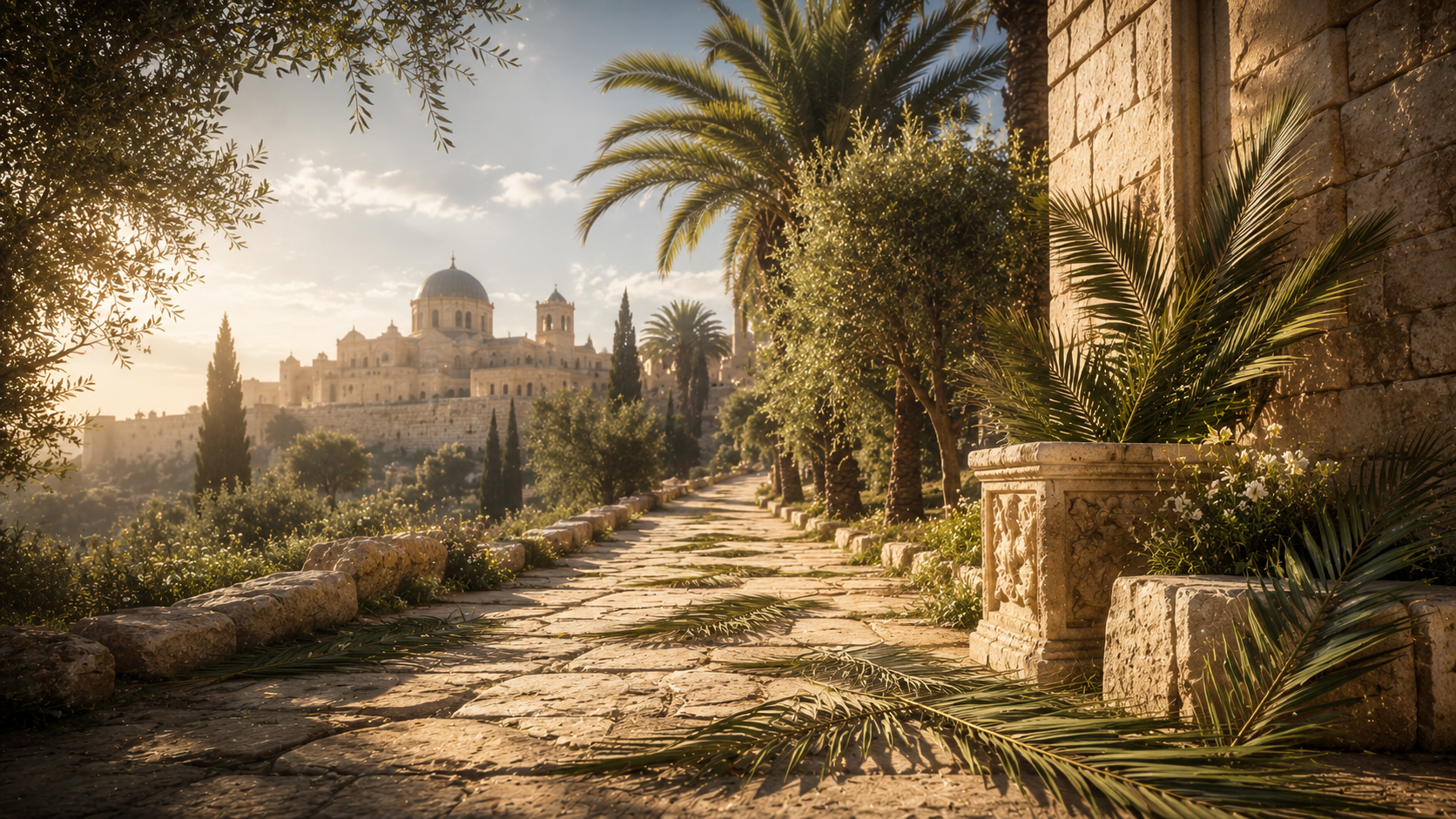 Holy Week CountdownMove through Palm Sunday, Maundy Thursday, Good Friday and Easter.→
 Holiday DirectoryReturn to the full holiday countdown library.→
Questions
Palm Sunday FAQ
Clear answers about the date, countdown target and seasonal context.
When is Palm Sunday?
Palm Sunday is the Sunday before Easter.
Why does Palm Sunday move?
It moves because Easter Sunday moves each year.
What does this countdown use?
It calculates Western Easter and counts seven days backward.
Is Palm Sunday part of Holy Week?
Yes. It is commonly treated as the beginning of Holy Week.
Do all churches observe it the same way?
No. Practices vary by denomination and country.